Presents for one year old twins and triplets

present ideas for one year old twins

When it comes to buying presents for one year old twins or triplets, as always, it depends on the situation. Should you get the same same, or same but different or totally different?

Read our blog HERE on buying toys for twins and triplets.

Duplo

Duplo is one of those “perfect gifts” for multiples.  Here are my 10 reasons why.

  1. There is no WRONG way to play with Duplo.  You can either follow the kit instructions, or free build with it. 
  2. It develops colour and shape recognition.
  3. Duplo helps to develop fine motor skills.
  4. You can use it to develop language and counting skills.
  5. It promotes sharing, which is something that our multiples need to learn as early on as possible.
  6. Duplo can be added to for future birthday or Christmases by you or by loving Aunts, Uncles, Grandparents etc. 
  7. It helps develop hand eye coordination.
  8. Its fairly easy to store, and its pretty easy to pick up.
  9. Your multiples will learn problem solving skills.  Be it trying to attach two bricks together or simply finding the right sixed piece they need, right through to basic engineering principles.
  10. It doesn’t hurt nearly as much as Lego if you stand on it in the middle of the night!!!

Shop DUPLO ideas here.

christmas presents for one year old twins
Continue Reading →

Establishing breastfeeding with twins or triplets

breastfeeding twins twinfo

We all know that fed is best, but if you are looking at breastfeeding – either directly from the breast or expressing and bottle feeding, then Twinfo has put together five tips to help with establishing breastfeeding with twins or multiples.

Establishing breastfeeding with twins or triplets can have its challenges.  Remember – breastfeeding is a learned skill, especially for the mother.  For some, the journey is an easy one.  For others there may be a few bumps in the road along the way.

Twinfo has complied five tips for establishing breastfeeding with twins or triplets to help you over some of those bumps.

1.      Understand how breastmilk is made

Did you know that your breasts have been preparing for pregnancy since you were in your mother’s womb?  When you were born, your main milk ducts had already formed. Your mammary glands stayed quiet until you reached puberty, when a flood of the female hormone estrogen caused them to grow and also to swell. During pregnancy, those glands kick into high gear. Before your babies arrive, glandular tissue has replaced the majority of the fat cells and this accounts for your bigger than before breasts.

Nestled among the fatty cells and glandular tissue are the milk ducts.  Pregnancy hormones will cause these ducts to increase in both number and size, with the ducts branching off into smaller canals near the chest wall known as ductules. At the end of each duct is a cluster of smaller sacs known as alveoli. The cluster of alveoli is known as a lobule, while a cluster of lobule is known as a lobe. Each breast will contain around 15 – 20 lobes, with one milk duct for every lobe.

Milk is produced inside of the alveoli, which is surrounded by tiny muscles that squeeze the glands and help to push the milk out into the ductules. Those ductules will lead to a bigger duct that widens into a milk pool directly below the areola.  The milk pools will act as reservoirs that hold the milk until your babies suck it through the tiny openings in your nipples. 

Your milk duct system will become fully developed around the time of your second trimester, so you will have milk to feed your babies even if they arrive earlier than you are anticipating.

You can read more about how breastmilk is made HERE.

breastfeeding triplets twinfo

2.      Speak to a lactation consultant

While you are in hospital, take full advantage of the lactation consultants that are available to assist you.   Insist on seeing them each day of your stay, and get them to observe and help you with some of those first feeds.  Once you are discharged, most States and Territories offer breastfeeding support via a drop in centre of some kind that you may be able to access for the first few weeks after discharge.  Make sure you find out where your nearest one is before you give birth and find out how and when you can access it. 

If there is not a government run facility near you, or you cannot access it, there is a free breastfeeding support line through the Australian Breastfeeding Association.  Familiarise yourself with their services, and make sure you have their details handy.

Alternatively, you can engage the services of a private lactation consultant.  Many lactation consultants now work via zoom, so you may not even have to leave the house to utilise their services.  Take the time while you are pregnant to find the details of a lactation consultant, so then, if you need one, you can easily reach out to them.

Unfortunately, private lactation consultants aren’t covered by Medicare. However, you can find a list of GPs trained in breastfeeding support HERE, who can provide services eligible for a Medicare rebate.

3.      Ensure you have a good feeding pillow

A supportive breastfeeding pillow is worth its weight in gold, especially if you plan on tandem breastfeeding.   Twinfo recommends the Things for Twins feeding pillow, which you can find HERE.

The Things for Twins twin feeding pillow can also be used for bottle feeding.

establishing breastfeeding for twins

Most hospitals do have tandem pillows that you can borrow during your stay, but you may have to ask them to find one for you.  This would be a useful question to ask your midwife at one of your antenatal appointments.

You may find that at the start your babies are just too little to tandem feed.  Or you may feel more comfortable feeding them just one at a time.  Whatever you decide, a decent breastfeeding pillow is a must.

You can read Twinfo’s blog on 10 reasons why feeding multiples separately may be the best option for your family HERE.

4.      Look after yourself

In the early days it is imperative that you look after you.  You have just birthed multiple babies! It is time to sit back and let the others look after you while you rest and recover.  Ask for and accept help in whatever form you need.

It is important to ensure you are drinking enough water, as breastfeeding is thirsty work, and eating good foods.  

5.      Prevent cracked and damaged nipples

Did you know that silver is a natural antimicrobial, antifungal, and antibacterial metal that also contains anti-inflammatory agents that has proven to heal, prevent and alleviate cuts, wounds, soreness, blisters and infections from the result of breastfeeding or pumping. 

Mothers have discovered the natural benefits of silver not only helps them find relief from common nipple wear and tear, it was also a great companion, with appropriate medical practitioner advice, to support recovery from nipple thrush, mastitis and milk blebs.

Silverette® silver nursing cups are a support product to help mums get through any stage of breastfeeding. With the natural antimicrobial benefits of natural silver, the cups prevent, protect and heal cracked, sore nipples associated from breastfeeding or expressing.  They simply slip into your bra between feeds. 

Find out more about the Silverette® HERE.

establishing breastfeeding for twins and triplets

Establishing breastfeeding with twins or triplets

Remember, breastfeeding is a skill that mothers and babies learn together.  Use this time to get to know your babies.  A mothers mental health goes a long way towards a successful breastfeeding journey.  So try not to put too much pressure on yourself, or your babies.  We hope that these five tips for establishing breastfeeding with twins or triplets are useful.

Read our five organisational tips for breastfeeding multiples HERE.


Twinfo

Twinfo is Australia’s largest, most supportive, online community for parents of twins and triplets. Twinfo offers advice, products and services that make raising your babies easier, freeing you up to enjoy all the precious moments.

You can connect with Twinfo via the Website, Facebook, Instagram, Pinterest or Etsy.

Choosing a daycare for twins or triplets

Choosing a daycare for twins

Choosing a daycare for twins or triplets can be a big decision.

Whether you are looking at sending them to daycare because you need to go back to work or if you want to give them a bit of time to socialize and get to learn new and exciting things, it can be difficult on you as a parent.

It is a time when you start to be away from your children, they learn a lot more independence and you have to learn to spend your days not chasing after their every need (which can be a nice feeling).

When choosing a daycare for twins or triplets there are a few things that you should consider.

triplets starting daycare

Types of daycare for twins or triplets

There are a few different options when it comes to daycare and each system is set up a little bit differently.

  • Centre based daycare – If you choose a centre based daycare your children will be in a centre that is able to cater to a larger amount of children and generally have separate rooms based on the ages of the children that are attending. Centre based daycares have a larger amount of educators to account for the number of children that they have and they tend to stick to set activities throughout the day and depending on the centre may even include ready for school programs.
  • Home based daycare – A home based daycare is a centre that is set up within the home of an educator. There are rules around home based daycares and then number of children that they are allowed to have. The atmosphere in a home based daycare is a lot closer due to the limited number of spots available.
  • Au Pair / Nanny – Another option is hiring an Au Pair or Nanny who will look after the children within your home for you. This is an option that can be suitable for those who want to still have their children close but having the assistance of someone else caring for them.
Twins starting daycare

Daily Schedule

It is important before choosing your centre that you have a chat with the owner or the director of the centre along with the staff that will be looking after your children so that you can find out a bit more about the centre and the way that it runs on a day to day basis.

This is a good time to chat with the staff about any concerns that you may have in regards to learning for your children and whether they are able to cater to this and assist with the learning process.

Finding out about the menus is also another good point to check with the staff. Some centres require you to bring your own food. This means you need to know which foods are able to be brought in and which are not (due to allergy risks). For those that supply meals it is important for you to raise any allergies or intolerances that your little ones may have.

Rooms / Arrangements

Another question that you should ask is whether your children will be in the same room or in separate rooms.

If there is the option for them to be in separate rooms, you will need to decide if this is something that you would like to do.

There are benefits to both having them together and having them separate. However this is a personal choice that only you can decide on.

twins daycare

Personal Feeling

The most important thing when choosing a daycare option for your twins or triplets is your personal opinion on the centre and how you feel when in there. It is a good idea to organise to go into the centre, get to know the staff and how the centre works.

This will help to make you feel comfortable with the centre and decide if it is something that you are happy with and confident in sending your children to.

Without a feeling of security and comfort within the centre you run the risk of spending your days worrying and feeling insecure.

Choosing a daycare for twins or triplets

Its important to understand that choosing a daycare for twins or triplets can be a lengthy process. Finding a centre with availability for multiple children can be tricky. Particularly if you have set days you need. Start the process early, as, depending where you live, daycare can be limited.

You may find that you may have to start them a bit earlier than planned, just to hold the spots, for when you do actually need to return to work. This can be unexpected and frustrating.

Starting daycare can be a big thing for little people. Talk to them about it and get them excited for the next chapter in their little lives.

when should twins start daycare

Twinfo

Twinfo is Australia’s largest, most supportive, online community for parents of twins and triplets. Twinfo offers advice, products and services that make raising your babies easier, freeing you up to enjoy all the precious moments.

You can connect with Twinfo via the Website, Facebook, Instagram, Pinterest or Etsy.

Reducing your carbon footprint with twins or triplets

reducing carbon footprint with twins

Author: Chloé Miller

Reducing your carbon footprint with twins or triplets

Choosing to go ‘eco’ with a baby is a big decision. Some choices mean a little more work and possibly a little more cost, BUT… some choices are easy and save you money too. Which is a big plus when you are juggling more than one baby at a time! Whether you can make a few small changes or go the whole hog and commit to everything doesn’t matter. It’s all about doing what you can to reduce your impact and help create a future for your babies which is safe and healthy.

Traditional baby stuff (wipes, nappies, lotions, baby bath, clothing) contributes a huge amount to landfill. I want to take you through a few examples and show you how you can really make a difference by making some small changes.

And just think! With twins or triplets, you’ll be making double or triple the difference!

landfill and twins

Let’s start with nappies

You go through approximately 7000 nappies with each child. If you are buying traditional ‘disposable’ nappies, i.e. plastic, they are all going to landfill and contributing to landfill emissions. Nappies stay in landfill for approximately 500 years before breaking down into microplastics that stay in the environment forever.

If you would like to reduce your carbon footprint with twins and triplets via nappies, you have three main options:

Use reusable cloth nappies

These consist of an outer shell and an insert that are washed and reused. Yes, there is washing involved, but once you get in the swing of things, it becomes a habit. Your investment per child is around $350 for about 10 nappies (compared with an average of $3000 for disposables). You can usually use the same nappies repeatedly until your child is toilet trained. If you want to try reusables, but don’t want to face the washing, there are cloth nappy washing services you can use.

And its not as hard as you may think. Read our tips on using cloth nappies for twins or triplets HERE.

can you cloth nappy twins

Biodegradable disposable nappies

These are readily available in mainstream supermarkets and are made from natural, biodegradable material. They aren’t any different to use than plastic-based nappies and in fact are better for baby and the planet. These are not the number one choice because you still need to send them to landfill where they will take a very long time to biodegrade, but a great option when you are juggling multiple babies at once.

Toilet train early

This may seem like a funny one but the earlier you can get your kids out of nappies, the better for the planet and you! No judgements here on how long that process will take, as we all have our own approaches and all kiddies are different, but if you have the patience and time to get this going early, you’ll reduce the number of nappies you send to landfill.

Clothing choices can help reduce your carbon footprint with twins or triplets

Another way to reduce your carbon footprint with twins and triplets is to be careful about baby clothing. Babies and children need quite a few items of clothing due to all the ickiness that takes place, but what are the best sustainable options that are kind to the planet and baby? And which options will help you with twins or triplets?

Hand-me-downs/second-hand clothing

If you can avoid buying new clothes, especially cheap, ‘fast fashion’, you are already doing your bit for the planet. Fast fashion is very attractive as it is cheap and cute, but the problem is that it isn’t made to last so there is a cycle of discarding and replacing because it is so affordable. Aussies on average buy 27kg of clothing a year and discard a whopping 23kg of that to landfill each year! There is also an ethical issue with fast fashion as most of it is made overseas in sweatshops where workers are underpaid and overworked.

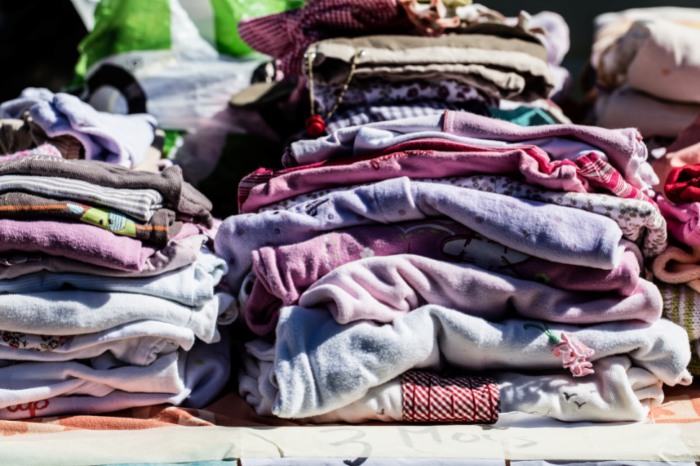
Sooooo… if you know someone with older kids, hit them up! And, obviously, if you have older kids, save all their clothes for your bubs. You can find secondhand clothing online and at op shops and some pieces are really cool. I have been lucky enough to receive bags of hand-me-downs from friends and colleagues over the years and the kids love going through all the ‘new’ items and choosing their favourites. And the more hand-me-downs you get, the more to share amongst siblings.

sustainable living and twins

Ethically made clothing

If second-hand isn’t your thing, another option is to make sure you are buying ethically made clothing so that you know there weren’t any sweatshops involved, you know the growing and manufacturing process was sustainable AND once the clothes are discarded, they will biodegrade. Go for natural fibres like cotton, hemp or bamboo which are nice and soft for babies.

For clothing that can’t be donated or passed on, check out Upparel who take unwanted textile waste and recycle it into brand-new awesome stuff.

Borrow toys and books to help reduce your carbon footprint with twins or triplets

Join your local libraries

A great way to reduce the number of new toys and books at home is to join your local library and your local toy library! You can borrow books and toys for your mob to enjoy and then go back and swap them every few weeks. The kids love choosing and you don’t need to get rid of toys that are broken or old by putting them in landfill. I think this is especially handy for twins or triplets so you can avoid 2 or 3 of everything taking up space at home.

twins and ways to reduce carbon footprint

Sensory and experience play

Another idea to reduce waste from toys is to use sensory and experience play rather than toys. Babies and kids love playing around in water, doing scavenger hunts in the garden, going to the park to look at all the animals and bird and feeling the breeze and sunshine on their faces.

DIY whatever you can to cut down on packaging and chemicals

There are lots of “little” ways you can reducing your carbon footprint with twins or triplets that will all add up.

  • Make your own play dough, slime or glitter from what you have in the pantry. It’s great fun for kids to help and can usually be done without any plastic packaging. Check out a quick YouTube tutorial.
  • Make your own baby food if practicable. It’s easy to buy plastic-free fruit and vegetables and whizz up all kinds of purees rather than buy ready-made food with packaging.
  • If you or the kids have a green thumb, try growing some of your own vegetables at home. Even just a few tomato plants can save money and packaging.
  • DIY your party decorations, food and games. Holding joint parties for your little ones is actually a great way to reduce the wastage of 2 or 3 parties so you are already onto a winner there! Then if you stick to the ‘reusable’ motto, you can’t go wrong. Make or buy decorations that you can reuse year after year. Skip disposable plates, cutlery and napkins and use what you already have. Use books or wooden toys as prizes instead of plastic toys. Set up clearly-labelled bins for guests to recycle their waste or drop off their dishes to be washed.
  • Use cheap pantry staples to clean your home naturally. This is a big one in my home as I don’t want to expose my kids to chemicals in cleaners or send them down the drain into our waterways. There are many ways to clean at home with 1 or 2 natural ingredients (think bicarb soda and vinegar) that are quick and easy. Making your own helps to avoid plastic packaging. But if that isn’t your thing, there are lots of natural, phosphate-free options available in supermarkets.
triplets and carbon footprint

Cut down on disposable baby wipes can help reduce your carbon footprint with twins or triplets

Like nappies, you have a few options when it comes to baby wipes, the worst of which is disposable. Like nappies, they can end up in landfill for a very long time and break down into microplastics. You can use an extraordinary number of wipes with one baby. And that is only going to be doubled or tripled with multiple babies.

So, what are your options?

Reusable wipes

These are a great option as you can just wash and reuse after each use. I have made my own with cut up squares from flannelette pyjamas soaked in soap and olive oil. But an easier option is to use face washers or similar. Just use soap and water and baby oil or similar to keep them damp and then rinse and soak before washing.

Biodegradable wipes

There are a few biodegradable wipes available in supermarkets these days although they are sometimes slightly more expensive than disposable wipes. They are made from natural materials like bamboo and will break down in your compost or in landfill eventually.

If you do choose disposable, please do not flush them down the toilet even if they say ‘flushable’. They don’t dissolve and build up in the pipes and create blockages.

Those are my top 5 tips for reducing your carbon footprint with twins or triplets.

I hope they are helpful to you. If you are interested in other sustainable-living ideas, please take a look at some more tips and tricks below:

General sustainable-living ideas

  • Gift wrapping and craft – Save everything! You will undoubtedly receive a lot of gifts from the time your babies are born. And for years and years into the future! Start a habit of saving every piece of wrapping paper, ribbons, gift bags, bubble wrap, tissue paper and so on so that they can be reused for gifts or used for arts and crafts and school projects. This saves you spending oodles of money on overpriced wrapping and saves all of that wrapping from landfill.
  • Gifts –Try to prioritise ‘doing’ gifts over ‘things’. There are lots of toys from your childhood that you probably don’t even remember. But you remember that great day at the beach or the fun park or a camp out in the backyard.
  • If breastfeeding works for you, it’s a great, zero-waste way to feed your babies. No bottles, no plastic packaging, no cost.
  • Recycle everything you can – Most people are very familiar with household recycling. There are also lots of other things that can be recycled such as batteries, markers and pens, soft plastic packaging and paint. Save these up and then recycle them in the appropriate places to stop them from going to landfill.
  • Buy pre-loved – Prams, car seats, baby carriers, baby seats, cots etc. You can find so many things in amazing condition on sites such as Facebook Marketplace or Gumtree. And then you can sell or donate them when you no longer need them.
  • Skip the car – Get outside with the pram whenever you can. Babies love getting outdoors. So if you can get outside for a walk to the local park or to your local shops, it’s a great way to cut down on carbon emission from your car.
  • Air dry washing – The sun is the best anti-bacterial dryer you can get and costs the earth nothing.
  • Collect excess water – Put a basin in your laundry sink or the bottom of your shower to collect grey water for your garden and/or to soak nappies and wipes.
  • Shop locally – Cut down on emissions from your car and to support local business.
twins and carbon footprint

Play ideas for triplets and twins under 6 months of age

tummy time for twins

Entertaining children at a young age can be difficult. Entertaining more than one of them at a time can be even more difficult.

Children under the age of 6 months need a lot of stimulation and as they can not do much for themselves it means that you need to be very hands on with them. Your babies may not be sitting up on their own yet, but may be able to sit up assisted in a small enclosed chair or surrounded by pillows. At this age, the activities that you will be doing with your babies will help grow many skills for them including their fine motor skills and communication skills.

We have put together a few of our favourite play ideas for triplets and twins under 6 months of age.

Continue Reading →

Twins and a toddler – 5 tips to help you get out of the house

how to contain a toddler

So its time to venture out of the house with your babies and their older sibling. How stressed are you at the thought of it? Leaving the house with a toddler is a mission as it is, but when it comes to adding in your baby twins as well, it can become a very stressful thought. However it does not need to be as difficult as it might sound. If your toddler is use to being in a pram and now they have to walk, you might be caught with some resilience from them, however in time they will get use to it. There are a few ways that you can make the outing easier on everyone.

Wear one baby

One option if you are not ready to have your toddler walking is to have one of your babies in a carrier on you. This way you are then able to have the other baby in the pram with the toddler in the other seat. This means that everyone is secure and there is no chance of your toddler running off. You can then swap the babies throughout your time out so that they both get some time up close snuggling with you.

Continue Reading →

Cloth nappies for twins or triplets

cloth nappies twins

Working on the assumption that a baby uses 5 nappies a day (which is probably an underestimated figure!) you will use approx 5,500 nappies per child for the estimated three years they are in nappies.  That’s a whole lot of nappies when you multiple that by twins or triplets!

Sadly disposable nappies have not come as far as we would like and the components in most mainstream disposable nappies will not decompose and the nappies will stay in landfill for over 200 years before it breaks down. This is such a scary thought and although there are now a number of bio-degradable and compostable nappies on the market, many of these still need to be in certain conditions for them to actually break down and the Australian landfill tips do not always have the right conditions.

This is one of the reasons that cloth nappies are becoming popular again and a lot of new mothers are starting to use them. There are many benefits to using cloth nappies for twins or triplets aside from reduction in landfill. And the positives definitely outweigh the negatives.

twins and cloth nappies
Continue Reading →

Choosing a twin pram. 7 tips from a twin mum.

prams for twins

Author: Rachel Pollard

Rachel is a twin mum herself, and a self confessed pram nerd.   She loves them so much she has set up her own business, Polish My Pram, cleaning and selling second hand prams.

Here are her top seven points to consider when choosing a twin pram.

Travel System Compatibility in twin prams

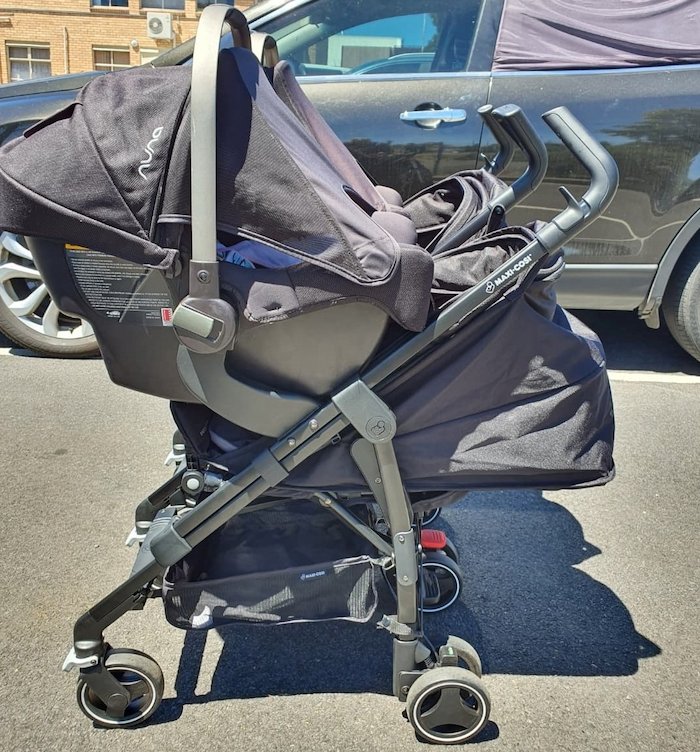
If you are going down the route of getting a travel system, make sure your get a decent capsule that will last the time in order to get your moneys worth. For example -Maxi Cosi Adaptors which are Compatible with a lot of model of prams, not just Maxi Cosi fits – Joie, Nuna, Cybex all fit also!

You are not limited to that ONE brand (and in my opinion all of the above are honestly better than the Maxi Cosi capsules). Travel system prams are a god send in themselves. Such ease of use when out and about, especially for those first 6 months (just a guideline for use- you can get up to 12 months + with certain capsules).

twin pram travel system
Maxi Cosi Dana for 2
Continue Reading →

Telling newborn identical twins or triplets apart.

mixing up newborn twins

Author:  Stephanie Ernst

I’m going to be honest here. I’m a mum of identical twins, and everyone talks about those legendary “Mum Goggles” – you know, where your twins look NOTHING alike to you. Everyone else can’t tell them apart.

Confessions Of A Twin Mum

Confession. I mixed mine up a lot when they were babies—a LOT.  And what makes this potentially more embarrassing is that my girls were born with Twin Anemia Polycythemia Sequence, so there was a colour difference for a while.  But, you know, when they’re side by side, that’s one thing.  I have baby photos now where I’m squinting and guessing who it is.

And of course, let’s not forget that one day, in that sleep-deprived newborn twin haze we all know so well – I grabbed the wrong baby and took her to her sister’s doctor’s appointment.

We know that identical twins have different fingerprints (get that dummy down to forensics!) and that there is the option of dressing them differently – that’s not always in line with what you as a parent want to do.  And that’s perfectly fine!

So instead, just for Twinfo, I’ve created the “Sleep-deprived twin mum’s guide to telling your identicals apart.”

telling triplets apart
Continue Reading →

Losing friends after having twins or triplets

finding twin dad friends

A lot of things change after starting a family.  Sadly one common and unexpected change is losing friends after having twins or triplets.

Things that change after having twins or triplets

Of course you realise that things will change once your multiples are born.  Your day-to-day routines will change. Your career may be put on hold so that you can continue to care for your babies at home. Let’s not even mention the changes in your body! And even your relationship with your partner will change.  But loosing friends is often not something that crosses peoples minds.

losing friends after having twins or triplets
Continue Reading →