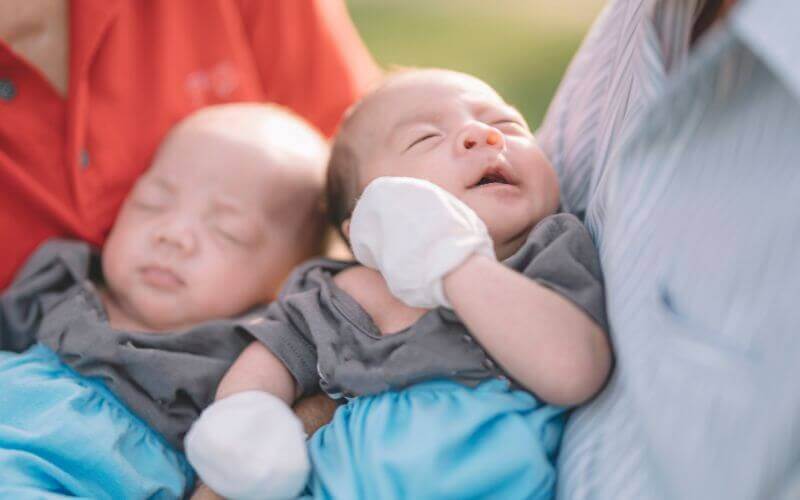
Finding out you’re expecting twins or triplets is a moment you’ll never forget. One minute, you’re lying on the ultrasound table, taking in the fuzzy black blob that’s your baby — and then the sonographer smiles wider and says those magic words:
“And here’s your other baby! Congratulations, it’s twins!”
Or, if you’re truly in for a wild ride, there’s even a third heartbeat flickering away on that screen.
From the very beginning, your babies are together. Wombmates first, and in most cases, roommates for years to come. Twins and triplets often follow the same routines — they’re fed together, bathed one after the other, share the same room, and sometimes even dress in matching outfits. It’s practical, efficient, and downright adorable.
But as they begin to grow, crawl, walk, and talk, it becomes harder not to compare them.
And that’s where things can get tricky.
Why It’s So Easy to Compare Twins — And Why That’s a Problem
On the surface, everything about their lives is shared. Same birthday. Same developmental stages. Often the same environment, same caregivers, same opportunities.
But here’s the truth: the differences between twins can be significant — and when we overlook those differences, we risk unfairly labelling one child as “ahead” and the other as “behind.”
Even something as small as food preferences can be wildly different. Take my own twins, now 15 years old — one will only eat red apples, the other insists on green. And don’t even try to swap them. You’ll hear about it.
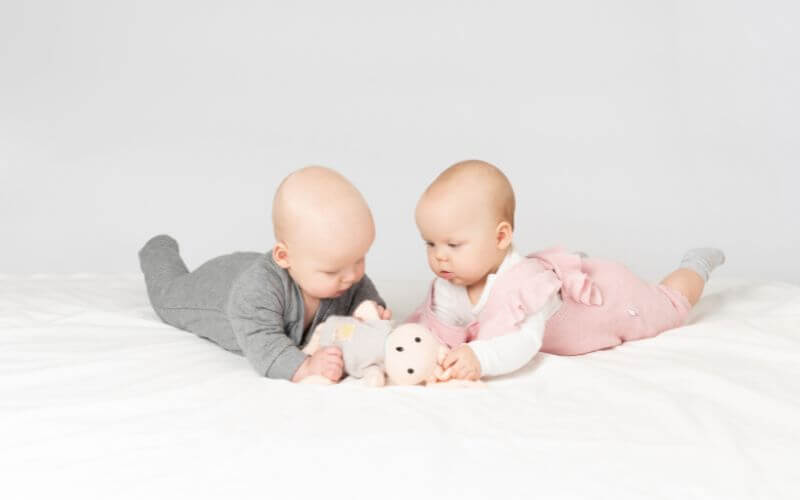
Differences Between Twins When Comparison Hits Hard At School
It wasn’t until our twins started kindy that I really felt the weight of comparison.
I was told my son was “behind” compared to his twin sister. Naturally, I panicked. Sleepless nights, doctors, occupational therapists — I went down every rabbit hole, trying to figure out what was “wrong” with him.
Turns out… absolutely nothing.
He didn’t have any developmental delays or learning issues — he was simply a left-handed, outdoorsy little boy with a passion for building things, while his sister had exceptional fine motor skills and a love of drawing. She was churning out artwork in adult colouring books while he was building bridges in the mud. Kids have different interests, strengths, and personalities.
Fun fact: while only 10% of the general population is left-handed, about 31% of twins are. Just one of many small but fascinating differences between twins.
How Being Boy/Girl Twins Has Helped Us Acknowledge Their Individuality
In some ways, we’re “lucky” our twins are boy/girl. It’s given us (and others) an easier lens to view them as individuals. I imagine identical twins — and even same-sex fraternal twins — may face more pressure to be the same, or at least similar, especially in school or social settings.
We chose to keep our twins in the same class at school for the first few years, mainly for logistical reasons. But because they’re different genders, they naturally drift toward different friends and gravitate to different interests. It helps reinforce their individuality, even while they share a classroom.
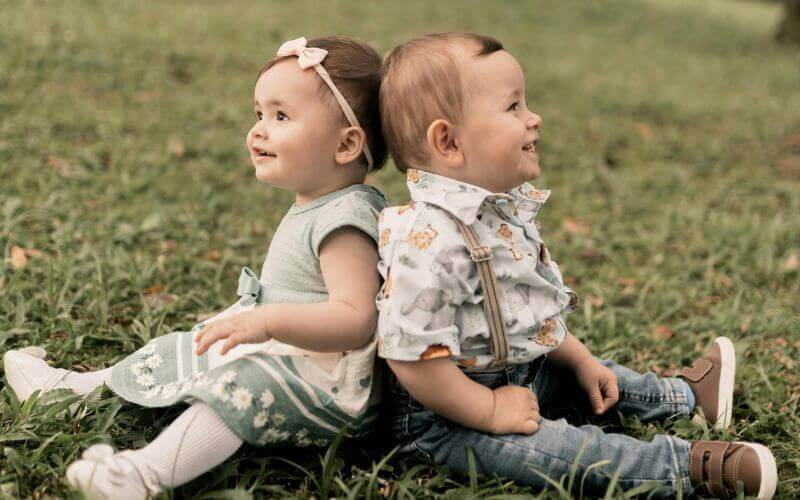
Differences Between Twins: School Report Cards Can Make It Hard Not To Compare Twins
When we recently received their first report cards. Both did well, but one outperformed the other academically. Cue the internal parenting spiral: Was I supporting them equally? Is one struggling?
But we had to take a step back.
Their strengths lie in different areas.
Our daughter was eager to please, loves school tasks, and has beautiful handwriting. She conforms to structure.
Our son? He’s more laid-back. He gives things a go but doesn’t always put in full effort — and that’s okay too. His curiosity and problem-solving skills shine through in other areas, like spatial awareness and engineering-type tasks.
The school report didn’t mention that she has a severe speech disorder, making her difficult for many people to understand. It also didn’t mention that her brother can design a structurally sound bridge from blocks in five minutes flat.
It’s a reminder that reports show a narrow slice of their development — not the full picture.
Honouring Each Twin’s Strengths — Instead of Measuring Them Against Each Other
If they were just one child — a singleton — we wouldn’t constantly compare their abilities. We’d simply acknowledge their strengths and support them through their challenges. That same mindset needs to apply to twins (and triplets).
Just because they arrived at the same time doesn’t mean they’ll develop at the same pace, enjoy the same things, or shine in the same areas.
The differences between twins are what make them interesting. It’s where their individuality grows, and it’s how they become confident, self-aware little humans who feel seen and understood for who they truly are.

Final Thoughts: Embrace the Differences Between Twins, Always
So yes — it’s natural to compare. But the real magic happens when we shift from comparison to celebration. When we stop asking, “Why isn’t he doing what she’s doing?” and start saying, “Look how beautifully different they are.”
Because raising twins isn’t about finding their similarities — it’s about helping them become their best individual selves, side by side.

Twinfo is Australia’s largest, most supportive, online community for parents of twins and triplets. Twinfo offers advice, products and services that make raising your babies easier, freeing you up to enjoy all the precious moments.
You can connect with Twinfo via the Website, Facebook, Instagram, Pinterest or Etsy.
